

What's in YOUR Search History?
Generation Z has grown up on the internet. For us, it's second nature to find whatever information we want at our fingertips, when we want it, or to find information we never wanted or needed. In my teenage years, I practically lived on my phone. For this project, I used web extensions to track the websites I visited and the types of content I consumed over the course of three days. I wanted to get a clearer picture of how I actually spend my time online, since it can be easy to underestimate or overlook certain habits when using the internet throughout the day. By recording the platforms I used and categorizing the content as school, leisure, or personal, I was able to see patterns in my daily media consumption. My goal was not only to measure how much time I spend online, but also to better understand what kind of media consumer I am and how my internet use reflects my priorities, interests, and responsibilities. I wondered if I'd find a durastic change in my time spent digitally now versus how it once was.
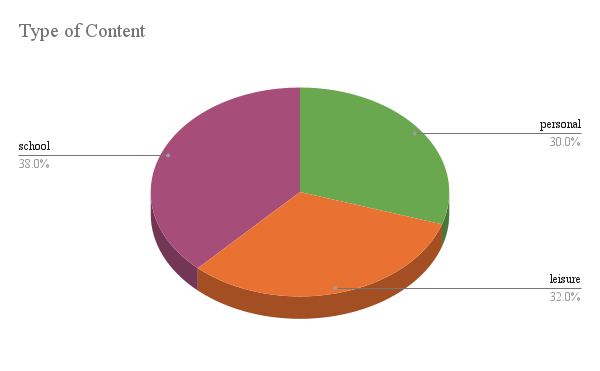
My internet content intake appears fairly balanced, but it is clearly shaped by my academic work. According to the data, 38% of the content I consume online is school-related, while 32% is leisure content and 30% is personal use. This suggests that the internet functions primarily as a tool for my education. A large portion of my time online is spent researching, completing assignments, or accessing course materials. However, the relatively close percentages between leisure and personal use also show that my internet habits are not entirely focused on productivity. I still spend a significant amount of time exploring personal interests and entertainment, which helps balance out the more structured academic side of my online activity.
The platforms I use most often further highlight how central schoolwork is to my internet use. Google and D2L make up the majority of my platform activity, which makes sense because they are essential for searching for information and accessing class materials. Google often acts as my starting point whenever I need to research a topic, while D2L is where I check assignments, readings, and course announcements. Other sites related to reading and literature, such as Cultural Reads or Electric Literature, appear in smaller amounts, but they still show that I spend some time engaging with written content online. Overall, this suggests that when I use the internet for learning, I tend to focus on reading articles, essays, or research materials rather than primarily consuming video or visual content.
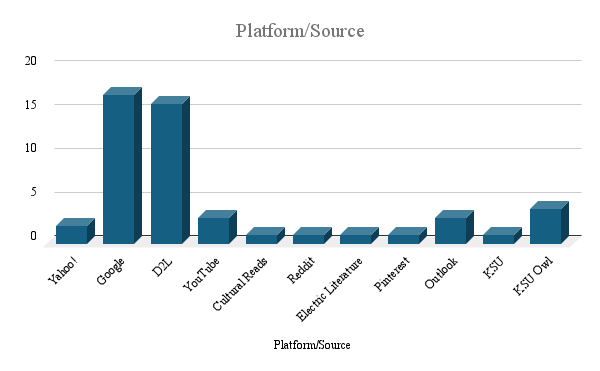
At the same time, the data shows that I do use the internet for entertainment and personal interests. Platforms like YouTube, Reddit, and Pinterest appear in my usage, although not nearly as often as academic platforms. These sites usually allow me to explore hobbies, watch videos, or browse ideas and creative inspiration. The relatively low percentages suggest that entertainment media does not dominate my online routine. Instead, my internet use is mostly centered around learning, whether that's researching something I'm fascinated by, or completing school-related tasks, with leisure browsing acting as a secondary activity.
Create Your Own Website With Webador