


As you might have seen me state on this blog's home page, I am an outspoken horror fan.
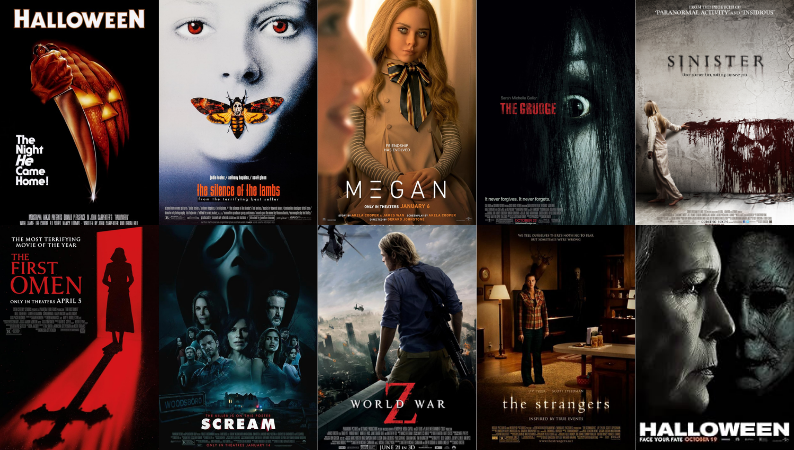
Besides the adrenaline rushes, pop culture relevance, and music tracks, there's a lot of reasons to appreciate horror media.
There are a lot of genres I enjoy exploring when it comes to movies, TV shows, and books. Every single genre has specific strengths that I feel it plays into: fantasy or sci-fi is a deeply creative process, challenging the limits for imagination with such rich world-building. Dramas profoundly build characters through dialogue and intentional plot points to catapult you into the story. And romances can find the beauty in the world, showing two people finding their way to one another.
From what I've noticed, a well-done horror movie does all of these things (well, maybe besides the beauty in the world part).
I was actually quite the scaredy-cat as a young child, but once I started to come out of my shell more, I found that I enjoyed things that "disturbed" me. At first, I feel it came from being a quirky middle schooler enjoying things because I felt like I wasn't supposed to. But that evolved with time, as my brain developed and I understood why I was drawn towards things that left others uncomfortable.
"I think I'll do some grocery shopping. I figured I'd get the lay of the land - have a nice morning with your murder victims!" -Tracy Oswalt in Sinister
My first horror movie that challenged my underdeveloped horror palate was Sinister, which I've written about before on my personal blog (you can see that post here).

Sinister has plenty of jumpscares to keep a viewer engaged. And, I'd say at least MOST of them are well-done. I'm not at a place with my horror movie consumption where jumpscares are my priority for a good flick, but they can be done well. I might also go as far as to say that the antagonist in Sinister wasn't the scariest part for me, either. (Frankly, I sometimes wonder if he could've been way more formidable as a faceless entity.) But I absolutely adored the concept behind the film, the characterization we see in our main family, and the soundtrack.
The most notable part of Sinister for many horror fans is its ending. While other elements of a horror story will certainly help its effectivenes, I feel that a fitting ending is the most vital for this genre. Sure, it's hard to feel scared when a horror movie character makes dumb decisions that ultimately kill them, because we know we probably wouldn't do the same things. If there's weak dialogue or story establishing earlier on, you're not as invested once the main part gets going. But many horror stories rely on this suspension of belief that the director and screenwriter is trying to sell to the audience. With Sinister, it's as if they're telling us to overlook a very unlikely scenario in which a demon is using children as a vessel to murder their entire families in a chain reaction, and find a bigger picture. And the best way they can get even the most cynical of viewers to shake in their metaphorical boots is with the wrap-up of the story.
Any flaws I might have detected with Siniser were completely blown out of the water with the film's resolution. (Spoiler alert!) Our main character, Ellison, makes some choices that some find questionable - yet, with his excellent characterization, as well as family dynamics the film establishes in its prelude, it makes sense within the story. He does reach a point where he's desperate to run away from the madness finding him and his family, but by then it's too late. In the very end of the movie, the demon Bughuul wins. Ellison's daughter kills the family quite brutally, and that is the end of the story.
The first time I watched the movie, my opinion was entirely reactionary to the disappointment that the bad guy won. They deserved to live! And Ellison made plenty of good choices that should have saved him in the end... right?
And that, my friends, is the bigger picture. The reality that no matter what you do, bad things can happen. THAT is what makes Baghuul so scary. The fear is in an acceptance that there was little they could do to escape such a brutal fate, and even if you did things differently, the same might be said for you. Now, everytime I rewatch or think about this movie, I associate with the immediate chill that ran over my body when I realized they lost. I think about how disturbed I felt, like there were pins and needles in my stomach. And that brings us to why I wanted to talk about Sinister, to make a bigger point:
"Art should comfort the disturbed, and disturb the comfortable." -Cesar A. Cruz

There is an art to feeling disturbed. And I'm not talking about from everyday life. But whenever you are reading a story, or watching a screen, and it can make you feel disturbed? Not grossed out, not just shocked, but that unsettling, rattled type of feeling? There's something special with that.
That's not a feeling you can simply garner from random and excessive gore, an obnoxiously designed villain, or randomly loud and startling jumpscares. To finish a story, no matter the form, and to feel disturbed, is an entirely different thing. It's a lasting feeling. It's the type of thing that makes you think about what you've watched. Sometimes, it can be something you come to enjoy, but you don't want to watch again for a long, long time. But it's made its mark on you, and changed how you might've known/understood something before watching.
By my metrics, a good horror movie can make you scream. An even better horror movie will have you sleeping with the lights on. The best horror movie will make you disturbed. You'll think about it for weeks. And it'll change your brain chemistry. Ever since I felt disturbed by Sinister, it made me think about the unfairness in everyone's demise. Then, I came to understand why it ended the way it did. My final acceptance was loving the way it ended, and finding that a good ending isn't based off a happy ending.
In horror. there are too many stories that wrap up the story with a pretty little bow. Tragedy struck, people died, and our final girl is walking away from the scene with a vague smile, in shock. That's a fine ending to your typical slasher. But then, there might be scenes taken some time later. Showing her a month later, enjoying life with friends. Resuming activities per usual. There are many different ways real life people grasp trauma, but most created stories aren't just aiming to be realistic - they're telling you something. And what does it say in a horror movie when you see all of the peril, all of the horrible scenarios endured, didn't create a lasting affect on our main character? Why did we bother going through watching everything happen in the first place if we can't see the lasting consequences of the entire premise?
There's a lot of different reasons I think certain horror movies try to give you a good-feeling ending. It's a way to pacify an audience, especially if it's a horror movie geared towards a younger audience. People don't like seeing the people they root for end the story on a bad note. Or, sometimes it's to sell a saccharine idea about finding beauty in life amidst its flaws. I don't think it's entirely bad to have a horror movie ending on a good note for its characters, but I also feel many that do, could be better if they DIDN'T.
Silence of the Lambs could've ended with Jodi Foster taking down Anthony Hopkins, but it didn't. It was too important for the audience could see her challenged in a moment of urgency to reconcile a sense of justice, with a warped intrigue in Hopkins' character caused by his severe emotional manipulation. Hereditary, a modern-day classic, ended probably the worst way it possibly could've for its characters. The way its ending panned out helped the audience to respect that the threat WAS something characters could have fixed all along, but didn't, as the movie is a metaphorical depiction of generational trauma.
With horror: to feel disturbed, you start to understand.
My good ending to this post...
When I was younger, I was only able to watch anything that made me smile and laugh by the end. Entertainment meant I should be happy, of course! And as I've grown older, I've started to create a separation in the stories and media I engage with: entertainment and art. Art makes you feel all kinds of things beyond joy, which is what these films will do. There's something way more complex and inherently interwoven with the story at face value that the audience should undestand. And while some things are in both categories, not everything will be. However, a well-done horror movie can fall into both.
From my own experience, as well as many other horror fans, these movies and books have taught me to challenge what a story should look like. They have challenged me to find an implicit story within the explicit one, to compare what you have consumed with what you know about yourself or the world.
I have branched out farther than past me ever would have imagined with my literary and film endeavors since learning to appreciate the darker feelings horror made me feel. I love to watch the heart wrenching dramas that make your world collapse if even for a day. I love to watch the thrillers that have a twist ending betraying everything that was shown to you initially. I love a dark comedy that uses irony to challenge your abilities to find joy through discomfort.
While many genres challenge the idea of a "good ending", and make us feel things we don't always like to feel, horror was the first to do that for me. And, as a genre always evolving, always relevant in pop culture, I feel that it doesn't get enough appreciation for what it can do beyond making you throw your popcorn at the screen in a fright. It has forever challenged the ways in which I approach watching or reading other stories, but it has also teached me to challenge the darkest, most taboo feelings humans like to ignore.
Add comment
Comments